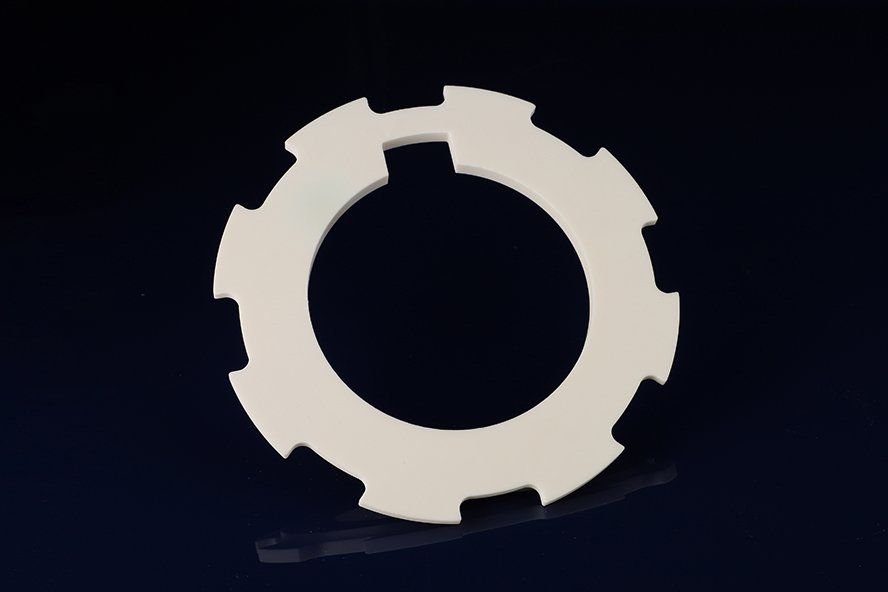
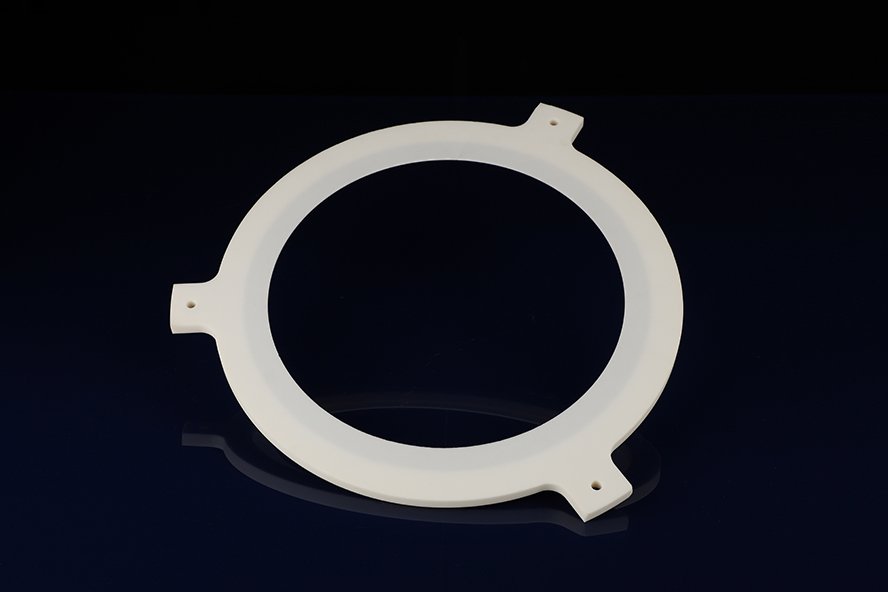
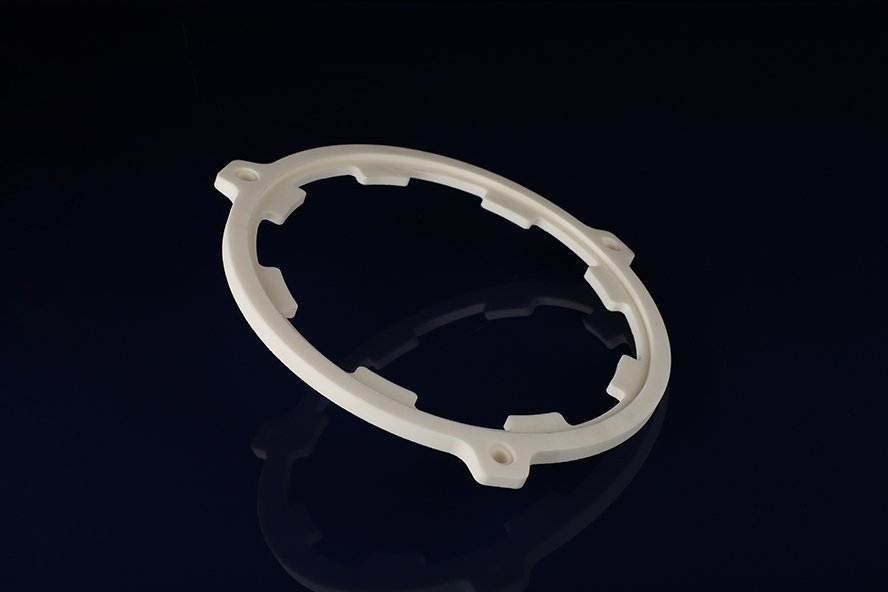
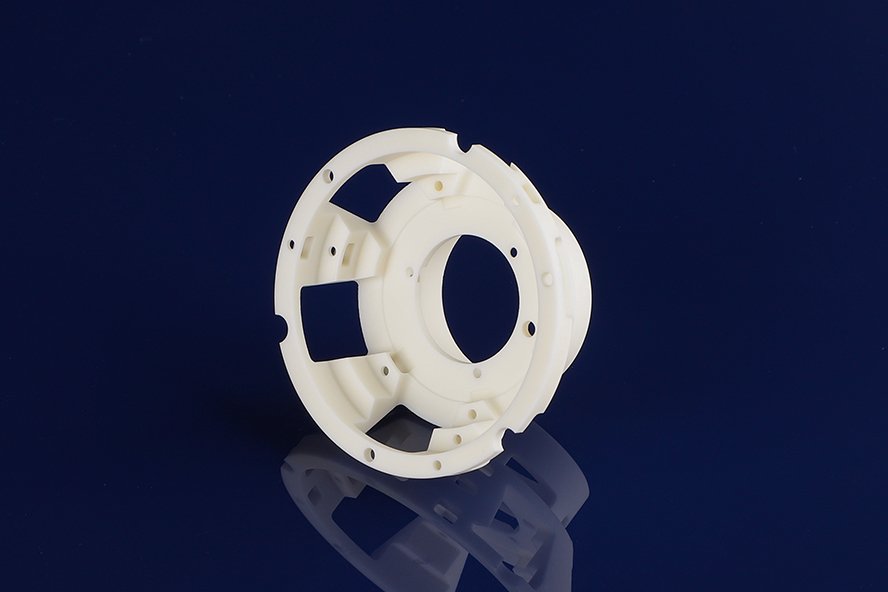
Alumina Ceramic 95-99.8%
Capable of precision machining of shaped, round and curved ceramic components
As a widely used industrial ceramic, its purity ranges from 90% to over 99.8%. It is a highly durable material. The higher the purity, the better the performance. It has high hardness, wear resistance and chemical resistance. It is suitable for semiconductors, medical, automation and other fields

Alumina Advantages
- Excellent biocompatibility
- Strong electrical insulation properties
- High chemical corrosion resistance.
- Superior high-temperature stability and thermal shock resistance
- Mohs hardness up to 9, with high hardness and mechanical strength
- Capable of withstanding large mechanical loads
- Low thermal expansion coefficient and specific thermal conductivity rates
- Excellent thermal conductivity and antioxidant performance
- Wear and abrasion resistant
- Transparent to microwave radio frequencies
- High compressive and dielectric strength
Alumina Applications
- Equipment lining
- High voltage insulator
- Artificial joints, dental implants
- Igniter insulator
- Valve seals, chemical pumps
- High-temperature support structures
- Laser optical components
- Sealing rings in mechanical equipment
- Electronic components & substrates
- High-temperature electrical insulators
- High voltage insulators
- Laser tubes
- Machine components
- Mechanical seals
- Precision shafts and axles in high wear environments
- Roller and ball bearings
- Seal rings
- Semiconductor parts
- Shot blast nozzles
- Thermocouple tubes
- Tap plates
- Valve seats
- Wear components
99.8%Alumina Material Properties
Mechanical Properties
| Property | Unit | Alumina |
| Density | g/cm³ | 3.93 |
| Vickers Hardness | GPa | 18 |
| Flexural Strength | MPa | 416 |
| Compressive Strength | MPa | 2556 |
| Water Absorption Rate | % | 0 |
| Alumina Content | % | 99.8 |
| Young’s Modulus | GPa | 358 |
Thermal Performance
| Property | Unit | Alumina |
| Thermal Conductivity | W/mK | 30.8 |
| Thermal Shock Resistance Strength | J/m²·K | 2700 |
| Maximum Operating Temperature | °C | 1765 |
Electrical Characteristics
| Property | Unit | Alumina |
| Permittivity (1 MHz) | – | 9.28 |
| Electric Strength | KV/mm | 14.7 |
| Volume Resistivity | Ω·cm | 2.7×10¹⁴ |
Note: This value is for reference only and may vary slightly depending on the batch conditions.
Machining Alumina
Alumina is available in various purities, typically ranging from 90% to 99.9%, with Jundro Ceramics specializing in 99.8% purity material.
The material can be processed through several methods, including injection molding, die pressing, isostatic pressing, slip casting, and extrusionFurthermore, alumina can be effectively joined to metals or other ceramics using metalizing and brazing processes.
At Jundro Ceramics is Professional alumina ceramics manufacturer, we specialize in high-precision, complex machining Alumina parts. With our extensive in-house capabilities, including 4th and 5th axis machining centers, drilling, grinding, milling, polishing, sawing, tapping, threading, and turning, we ensure the highest quality alumina components that meet strict specifications.
5-Axis Alumina Ceramic Machining
Frequently Asked Questions
Jundro Ceramics supplies multiple high-purity grades of alumina, including:
95%, 99%, 99.5%, 99.7%, and 99.8% Al₂O₃.
These grades cover applications from industrial structural parts to semiconductor, aerospace, and high-vacuum components.
Yes. Higher purity alumina offers:
Higher hardness and strength
Better chemical resistance
Higher dielectric strength
Lower porosity and improved surface finish
95% alumina is suitable for general industrial parts, while 99%+ alumina is preferred for semiconductor, vacuum, and precision applications requiring superior insulation and mechanical stability.
Yes. Jundro Ceramics is a professional alumina ceramic manufacturer with extensive experience in precision machining.
We support custom-made alumina components used in semiconductor equipment, automation systems, aerospace parts, vacuum tools, and high-temperature applications.
Services include CNC milling, grinding, polishing, slotting, drilling, and complex geometries.
Alumina (Al₂O₃):
Higher hardness
Higher temperature resistance
Better electrical insulation
More cost-effective
More brittle than zirconia
Zirconia (ZrO₂):
Higher toughness and fracture resistance
Better impact strength
Lower thermal conductivity
Suitable for wear parts requiring toughness
Alumina = harder & more temperature-stable; Zirconia = tougher & more impact-resistant.
Typical Vickers hardness (HV):
95% alumina: ~13.7 GPa
99% alumina: ~15.2 GPa
99.7% alumina: ~17.2 GPa
99.8% alumina: ~18 GPa
Higher purity correlates with higher hardness and better wear resistance.
 English
  简体中文
简体中文  Español
  Deutsch (Sie)
  日本語
日本語