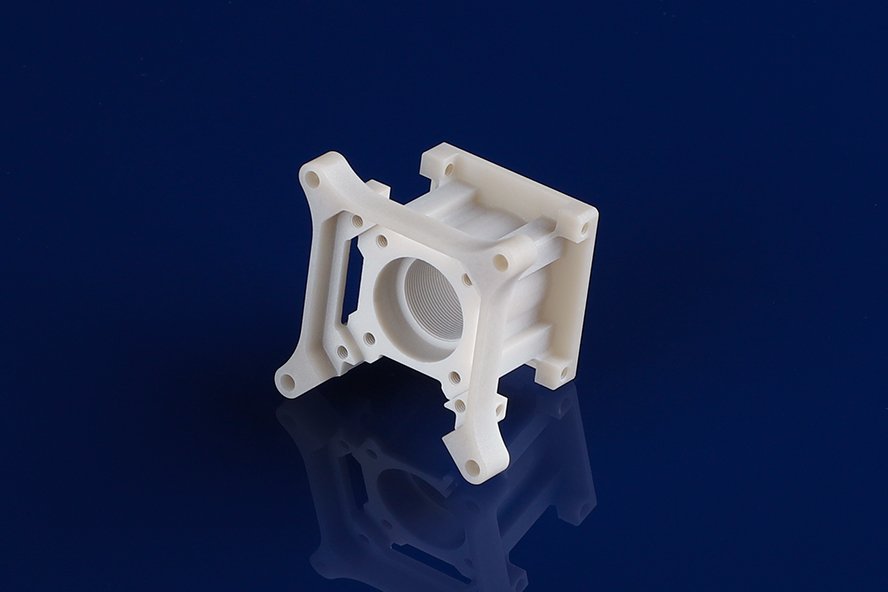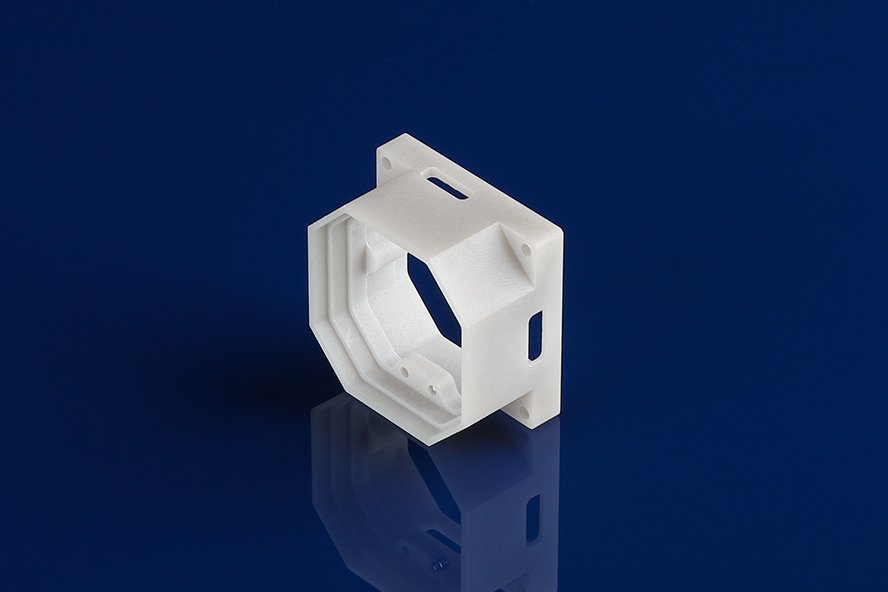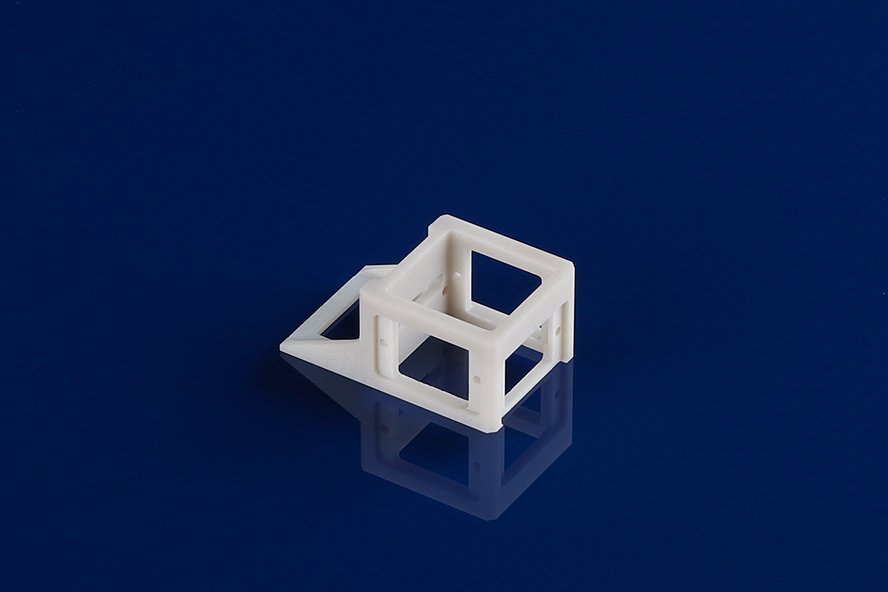
AlN-Aluminum Nitride Ceramic
AlN ceramics with excellent thermal conductivity (170-220 W/m·K)
Aluminum nitride (AlN) has high thermal conductivity and electrical insulation properties, is a perfect thermal match with silicon, and is a safe and non-toxic alternative to BeO. Suitable for high temperature applications
AlN Advantages
- Free from beryllia’s toxicity concerns.
- High plasma resistance and outstanding thermal shock performance.
- Thermal conductivity ranges from 170-220 W/m·K.
- Coefficient of thermal expansion closely matches silicon (Si).
- Offers excellent electrical insulation and mechanical strength.
- High bending strength and hardness, tolerating temperatures above 1000°C.
- Chemically stable, with low dielectric constant and minimal loss.
- Exceptional wear resistance for demanding applications.
AlN Applications
- Semiconductor packaging substrate
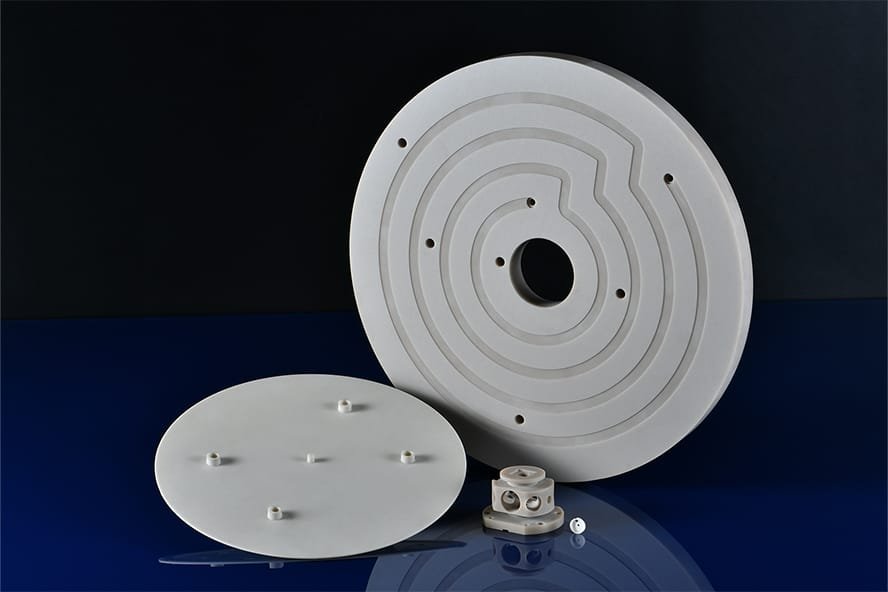
- AlN Wafer Carrier、heat conducting plate
- Microwave device substrate
- Laser diodes
- IGBT modules
- Antenna oscillators
- Power electronics
- High-frequency transformers
- X-ray equipment
- MEMS sensors
- High-power electrical insulators
- Water-cooled heatsinks
- Laser components
Aluminum Nitride Material Properties
Mechanical Properties
| Mechanical properties | Unit | AlN |
| Density | g/cm³ | 3.34 |
| Vickers hardness | HV | 1100 |
| Bending strength | MPa | 400 |
| Compressive strength | MPa | 2500 |
| Toughness | MPa·m¹ᐟ² | 3.5 |
| Elastic modulus | GPa | 310 |
| Poisson’s ratio | —— | 0.22 |
| Young’s modulus | GPa | 330 |
Thermal Properties
| Thermal performance | Unit | AIN |
| Thermal conductivity | W/(m・K) | 179.2 |
| Maximum service temperature | °C(carrying idler) | 1350 |
| Specific heat | J/(kg・K) | 720 |
| Thermal Shock | ℃(Put into water) | 350 |
| CTE(30℃~300℃,ppm/℃) | 1 × 10⁻⁶/°C | 4.06 |
| CTE(30℃~500℃,ppm/℃) | 1 × 10⁻⁶/°C | 4.85 |
Electrical Properties
| Electrical characteristics | Unit | AlN |
| Dielectric constant | 1MHz | 7.4 |
| Dielectric loss | 1MHz | 1.6 × 10⁻⁴ |
| Breakdown voltage | kV/mm | 18 |
| Dielectric strength | kV/mm | ≥20 |
| Volume resistivity @ 25 ° C | Ω・cm | 2.1 × 10¹⁶ |
Note: This value is for reference only and may vary slightly depending on the batch conditions.
Aluminum Nitride Machining
Aluminum nitride (AlN) is a high-performance technical ceramic known for its excellent thermal conductivity and electrical insulation properties. As a professional manufacturer of aluminum nitride ceramics, Jundro Ceramics is committed to providing ideal material solutions for a variety of high-precision equipment. With extensive experience in materials design, precision machining and application development, we are your best partner for aluminum nitride processing.
Need custom aluminum nitride ceramics? Contact us today to speak with our materials experts to create a solution that exceeds expectations!
Aluminum Nitride Prototype Machining
Our latest video records the process of CNC machining of aluminum nitride ceramics
Related Materials
Aluminum Nitride is undoubtedly one of the high-value materials that excels in semiconductor and electronic device applications. Of course, there are other high-performance materials such as Macor, Shapal Hi-M, Silicon Carbide, etc.
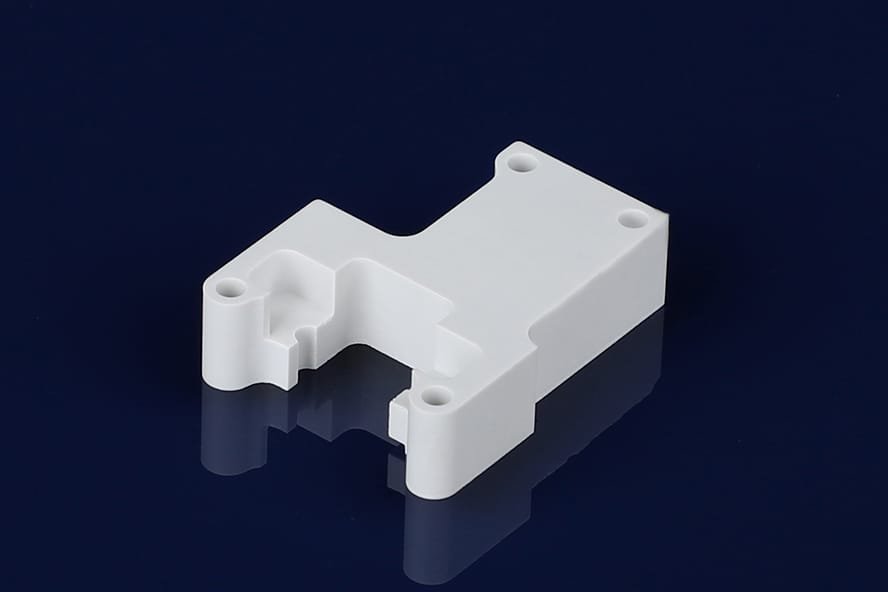
Shapal Hi M, also known as machinable aluminum nitride, has better performance than aluminum nitride and excellent additive properties
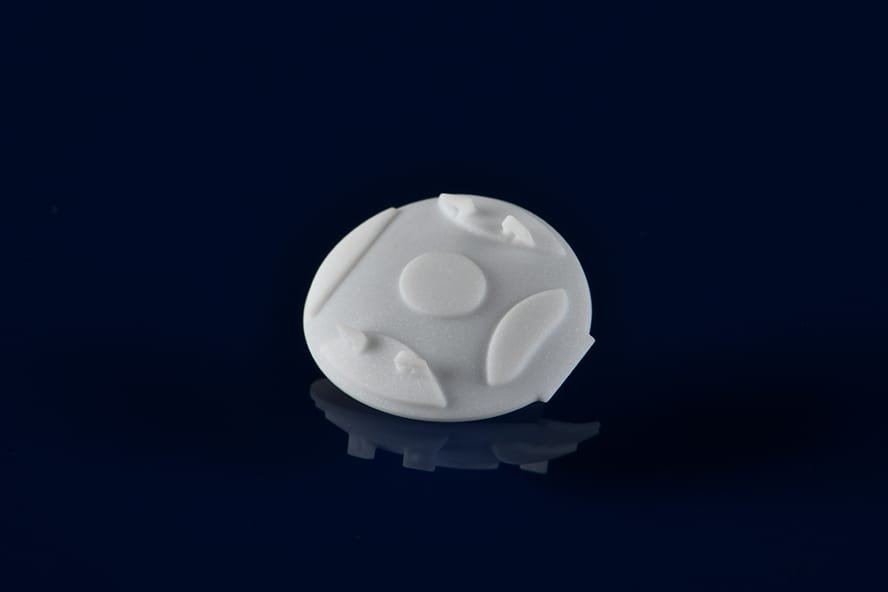
Macor is a glass ceramic with zero porosity and zero gas release rate, which has the same processing ability as metal and can achieve ultra-high processing tolerances.
Frequently Asked Questions
Aluminum Nitride (AlN) is a non-conductive, high-thermal-conductivity technical ceramic with excellent mechanical and thermal stability.
Electrical Conductivity: Electrical insulator (not conductive).
Thermal Conductivity: Typically >170–180 W/m·K, much higher than alumina and close to BeO.
Gas Tightness: It has excellent hermeticity and can be used in vacuum, plasma, and semiconductor environments.
Other Features: High dielectric strength, low thermal expansion (close to silicon), and good corrosion resistance.
It is widely used where high thermal dissipation and electrical insulation must coexist.
Aluminum Nitride is not easily machinable in its sintered form—it is a hard, brittle technical ceramic. It can be grooved, drilled, milled, and edge-ground, but requires diamond tools and experienced ceramic machining.
Chipping/Cracking: With proper feeds, speeds and coolant control, breakage can be minimized, but inexperienced machining can easily cause edge chipping.
Surface Roughness: Precision shops can achieve Ra 0.4–0.8 μm, and with finer diamond grinding, Ra 00.2 μm is achievable for critical surfaces.
Typical applications include:
Wafer carriers and wafer chucks
Heat spreaders and heat sinks
Thermal plates / heater plates
Insulating rings and alignment parts
Laser diode submounts
High-power module substrates
RF, microwave, and vacuum chamber components
Yes. AlN parts can be produced in small batches or prototype quantities using diamond machining and precision grinding.
Typical Lead Time: 7–15 days for small quantities (depending on geometry, thickness, and tolerance).
Complex components may require 2–4 weeks due to multi-step grinding and inspection.
Select suppliers with:
ISO 9001/14001 certifications
Proven diamond-tool machining capability for hard ceramics
Experience with tight tolerances (e.g., ±0.01–0.02 mm)
Thermal and dielectric testing capability
Cleanroom or semiconductor-grade handling
Material traceability and complete datasheets
Case studies in semiconductor, laser, or thermal management industries
A reliable supplier should provide prototype support, machining guidance, and consistent QC reports for every batch.
Jundro Ceramic is one such supplier, with extensive experience in precision AlN machining and proven capabilities for both small-batch and high-complexity parts.
| Property | Aluminum Nitride (AlN) | Alumina (Al₂O₃) |
| Thermal Conductivity | Very high (170–180 W/m·K) | Low (20–30 W/m·K) |
| Electrical Insulation | Excellent | Excellent |
| Hardness/Strength | Moderate | Higher, more robust |
| Cost | Higher | Low cost |
| Machinability | Difficult | Easier (but still requires diamond tools) |
| Best Use | Thermal management + insulation | General structural ceramic applications |
Conclusion:
Choose AlN when thermal dissipation is critical.
Choose Alumina when cost and mechanical strength are the priority.
Yes—Aluminum Nitride is the most common and practical replacement for Beryllium Oxide (BeO) in thermal and electronic applications.
It provides high thermal conductivity (~180 W/m·K) comparable to BeO.
It is non-toxic, unlike BeO, which requires strict safety controls.
AlN offers excellent dielectric properties and good hermeticity.
For most high-power electronic, laser, and semiconductor applications, AlN is the preferred safe alternative to BeO.
 English
  简体中文
简体中文  Español
  Deutsch (Sie)
  日本語
日本語